
10 Best AI Tools For Researchers (Recommended by Top Universities)

Research writing is no longer limited to searching papers, reading PDFs, and writing everything manually. Today, hundreds of AI tools exist in the market, each designed to solve a specific research problem. However, the real challenge is identifying which tools actually deliver strong results across the entire research workflow—from literature discovery to writing, editing, referencing, and AI detection removal.
After analyzing and testing numerous AI platforms used by researchers globally, including those recommended or commonly used by top universities, this article highlights the 10 best AI tools that solve almost every academic and research writing problem in a structured and efficient way.
10 Best AI Tools For Researchers
1. Scite
Best for smart citation analysis and evidence-based research
Scite helps researchers go beyond traditional citations by showing how a paper has been cited—whether it supports, contradicts, or simply mentions previous research.

Key Benefits:
Finds the latest research papers on any topic
Allows long paragraphs, not just keywords, for searching literature
Filters results by publication year, topic, and citation type
Shows citation context instead of just citation counts
Scite is widely used in universities to evaluate the credibility and relevance of research sources.
Access the tool Scite
Code: Promo50
2. Elicit
Best for extracting structured information from PDFs
Elicit allows researchers to upload downloaded PDFs and directly interact with them. Instead of manually reading dozens of papers, Elicit extracts meaningful insights automatically.

Key Benefits:
Upload and chat with multiple research papers
Create custom tables from selected papers
Extract key concepts, methods, and findings
Build a personal research library
This tool is extremely helpful for systematic reviews and literature analysis.
Access the tool Elicit
3. Research Rabbit
Best for discovering related and missing literature
Research Rabbit helps researchers understand how their papers are connected to existing studies.

Key Benefits:
Visualizes relationships between research papers
Identifies similar and missing studies
Helps track research evolution over time
Builds a connected research network
It is ideal for discovering papers that traditional keyword searches often miss.
4. Connected Papers
Best for visual research mapping
Connected Papers creates a visual graph showing how research papers relate to each other.

Key Benefits:
Generates a citation-based research network
Shows earlier and later works related to a paper
Identifies influential and foundational studies
Helps researchers explore a field quickly
This tool is especially useful for PhD scholars and advanced researchers.
5. ChatGPT
Best for brainstorming, explanations, and early drafts
ChatGPT assists researchers in understanding concepts, generating ideas, and structuring content.

Key Benefits:
Helps explain complex topics in simple language
Assists in brainstorming research gaps
Generates initial drafts and summaries
Useful for academic discussions and idea validation
It should be used carefully and always combined with human critical thinking.
6. Jenni AI
Best for academic outline building and citation-based writing
Jenni AI is designed specifically for academic writing and is highly effective for structuring research documents.

Key Benefits:
Builds professional research outlines
Writes content with in-text citations
Supports essays, research papers, and theses
Offers free daily word credits
Many universities recommend Jenni AI for structured academic writing support.
7. SciSpace (formerly Typeset)
Best for citation-based academic writing and evaluation
SciSpace helps researchers write with references while maintaining an academic tone.
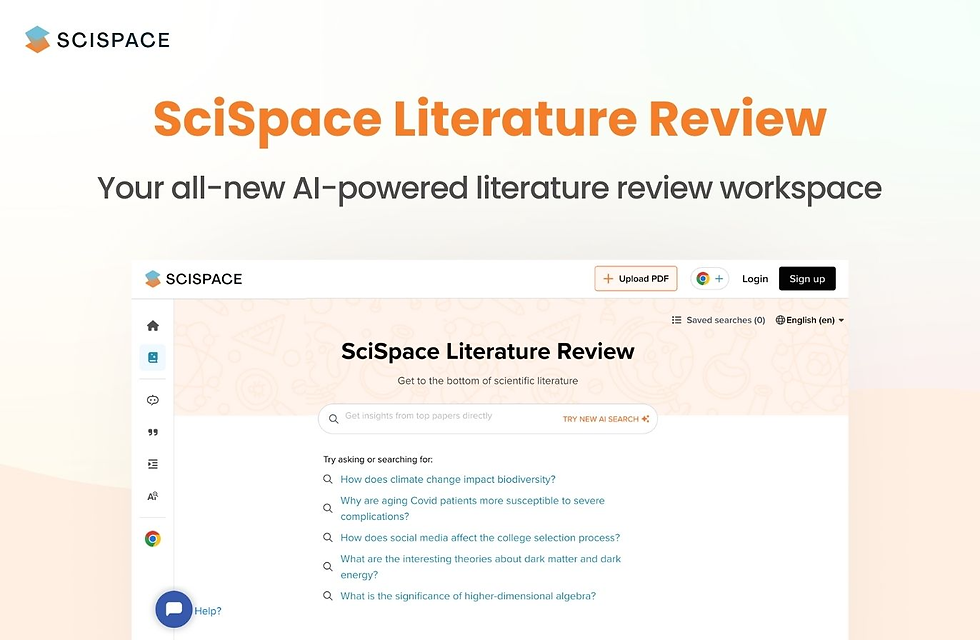
Key Benefits:
Writes section-wise research content
Provides references with each paragraph
Evaluates supporting and opposing studies
Improves logical flow and academic quality
This tool is valuable for improving research credibility and clarity.
Access the tool SciSpace
Discount code: Drrizwana20
8. PaperPal
Best for proofreading, editing, and academic tone improvement
PaperPal focuses on refining research writing rather than generating it.

Key Benefits:
Grammar and structure correction
Sentence-level academic rewriting
Improves flow and coherence
Builds outlines, abstracts, and titles
PaperPal is widely trusted for final-stage editing and polishing.
Access the tool Paperpal
9. Mendeley
Best for reference management and citation integration
Mendeley simplifies reference handling across research documents.

Key Benefits:
Manages large reference libraries
Integrates with online Microsoft Word
Supports multiple citation styles
Allows cloud-based access
Using Mendeley reduces referencing errors and saves significant time.
10. Undetectable AI + Originality AI
Best for AI detection removal and plagiarism checking
After writing, researchers must ensure their work is free from AI detection and plagiarism risks.
Key Benefits:
Humanizes AI-written content
Reduces AI detection scores significantly
Allows multiple content refresh options
Works well with major AI detectors
These tools should be used responsibly, combined with manual editing and critical thinking.
Access the tool Originality AI
Conclusion: AI Is a Support System, Not a Replacement
AI tools have transformed the research writing process, making it faster, more structured, and more efficient. However, no AI tool can replace human critical thinking, subject expertise, and ethical responsibility. The best research outcomes come from combining AI assistance with your own analytical skills.
When used correctly, these 10 AI tools can help researchers manage literature, write professionally, improve quality, and meet academic standards followed by top universities worldwide.
If you want to learn how to use these AI tools correctly, step by step, with real academic workflows, visit ScientificPakistan and explore our research-focused courses. Stay updated, write smarter, and build research that truly makes an impact.



UY88 khiến tôi chú ý đến cách thư viện nổ hũ được tổ chức khi cần tìm trò chơi theo chủ đề thay vì xem lần lượt toàn bộ danh sách. Tôi thường bắt đầu từ những tựa được giới thiệu như Đường Mạt Chược, Kho báu Aztec hoặc Neko may mắn, sau đó quan sát tên trò, hình ảnh và thông tin đi kèm. Với tôi, cách phân nhóm có ý nghĩa hơn số lượng trò được công bố nếu người dùng vẫn phải mất nhiều thời gian tìm kiếm. Những chi tiết như đường thắng, vòng quay miễn phí hay jackpot cũng cần được trình bày dễ hiểu. Tôi đánh giá khu nổ hũ hợp lý khi nội dung…
FLY88 khiến tôi chú ý đến cách giao diện kết hợp hình ảnh, tiêu đề và nút chức năng để tạo dấu hiệu nhận diện. Trong lúc trải nghiệm, tôi kiểm tra Bắn cá, Nổ hũ, Casino và Đá gà nhằm xem mỗi nhóm có được phân biệt đủ rõ trước khi truy cập hay không. Tôi tiếp tục mở Baccarat, Sicbo và Roulette để quan sát cách thông tin được trình bày bên trong khu vực Casino. Những thành phần như tên nội dung, hình ảnh đại diện và nút truy cập được tôi xem xét riêng vì chúng ảnh hưởng trực tiếp đến tốc độ nhận biết. Tôi cũng chú ý khoảng cách giữa các lựa chọn để tránh…
luck8 được tôi xem xét từ góc độ người dùng muốn dành thời gian đọc thông tin trước khi lựa chọn khu vực tiếp theo. Tôi bắt đầu với Casino, sau đó lần lượt xem Nổ hũ, Thể thao, Bắn cá và Đá gà. Thay vì mở nhanh từng mục, tôi dừng lại ở mỗi khu để quan sát cách tiêu đề, danh mục và thông tin được sắp xếp. Tôi chú ý xem phần nào giúp xác định nội dung chính và phần nào có thể khiến người dùng mất thời gian tìm kiếm. Sau khi đọc xong, tôi chuyển sang khu khác rồi thử quay lại để kiểm tra cảm giác tiếp nối. Với tôi, một giao diện có…
https://888vbet8.com/ khi kiểm tra cách thông tin được phân bổ trên một giao diện, tôi thường bắt đầu bằng việc quan sát những khu vực xuất hiện trước mắt thay vì đi ngay vào nội dung bên trong. Tôi xem tiêu đề, menu và khoảng cách giữa các nhóm để nhận biết thứ tự thông tin được ưu tiên như thế nào. Sau đó, tôi đi qua Casino, Thể thao và Xổ số nhằm xem mỗi nhóm có được phân biệt rõ trong tổng thể hay không. Tôi cũng thử chuyển từ một khu vực sang khu vực khác rồi quay lại để quan sát sự ổn định của bố cục. Bên cạnh đó, tôi xem phần đăng ký ở góc…
https://uu88tk.com/ khiến tôi chú ý nhiều hơn đến phần nổ hũ khi thử tìm các trò chơi theo nhà phát hành và chủ đề. Tôi quan sát cách những nhóm slot được phân loại rồi chuyển qua Pragmatic Play, PG Soft, Jili, JDB và Habanero để xem việc tìm kiếm có bị kéo dài không. Với số lượng trò chơi được nguồn giới thiệu khá lớn, cách chia danh mục trở thành yếu tố quan trọng để tránh giao diện quá dày. Tôi cũng thử quay lại danh sách sau khi mở một trò chơi nhằm kiểm tra khả năng tiếp tục hành trình. Nếu vị trí bộ lọc và nhóm nội dung được giữ ổn định, người dùng sẽ dễ…