
This One Citation Mistake Could Get Your Paper Rejected: Jenni AI

You may spend months collecting data, analyzing results, and writing your research paper, only to receive a rejection because of a citation mistake. While most researchers focus on grammar, methodology, and originality, many underestimate the importance of proper referencing. Even a single citation error can make reviewers question the credibility of your work, raise concerns about academic integrity, and create unnecessary delays during the publication process.
Citation is not just about avoiding plagiarism. It demonstrates that your arguments are supported by credible evidence, acknowledges the work of previous researchers, and allows readers to verify your sources. Understanding common citation mistakes can significantly improve your chances of getting your manuscript accepted.
Why Citation Matters More Than You Think
Many students assume citations are simply a formatting requirement. In reality, citations serve several important purposes in academic writing.
They build credibility. Every claim in your paper should be supported by reliable evidence. Proper citations show reviewers that your arguments are based on established research rather than personal opinion. A well-cited paper immediately appears more trustworthy and professionally written.
They protect you from plagiarism. Even if plagiarism is unintentional, failing to acknowledge someone else's ideas can still lead to serious academic consequences. Proper referencing gives credit to original authors while protecting your academic reputation.
They help readers verify your research. Reviewers often examine cited studies to confirm whether you have interpreted previous findings correctly. Accurate citations make it easier for readers to follow your research journey.
The One Citation Mistake That Causes Major Problems
The biggest mistake researchers make is incorrectly citing sources or creating mismatched references.
This includes situations where:
You cite an author in the text, but the reference is missing from the bibliography.
A source appears in the reference list but is never cited in the paper.
Author names or publication years are incorrect.
The DOI, journal volume, or page numbers are missing or inaccurate.
References are formatted inconsistently throughout the document.
Although these may seem like small formatting issues, reviewers often interpret them as signs of poor attention to detail. If simple citations contain errors, they may wonder whether your research methodology contains similar mistakes.
Common Citation Mistakes That Can Hurt Your Paper

1. Citing Secondary Sources Instead of Original Research
Many researchers quote information from another paper without reading the original study.
For example, if Paper B discusses findings from Paper A, some writers cite Paper A without ever reading it. This increases the risk of repeating incorrect interpretations or missing important context.
Whenever possible, locate and read the original source before citing it. This ensures your references are accurate and strengthens the quality of your literature review.
2. Using Outdated References
Research evolves quickly, especially in fields like Artificial Intelligence, Healthcare, Technology, and Business.
Including too many old references may give reviewers the impression that your literature review is outdated.
Instead of relying heavily on studies published ten or fifteen years ago, try to include recent peer-reviewed articles alongside foundational studies. This demonstrates that you understand current developments in your research area.
3. Mixing Citation Styles
One of the easiest ways to make a paper look unprofessional is by mixing multiple citation styles.
For example:
Some references follow APA 7.
Others follow the Harvard style.
A few resemble IEEE formatting.
Even if your research is excellent, inconsistent formatting suggests that the manuscript was not carefully reviewed before submission.
Always follow the citation style required by your university, journal, or conference.
4. Missing Page Numbers for Direct Quotes
If you copy someone's exact words, you must provide the page number whenever the citation style requires it.
Without page numbers, reviewers may question whether the quotation has been properly referenced.
Direct quotations should be used sparingly. Instead, paraphrase information in your own words while still providing appropriate citations.
5. Overusing Citations
Some writers believe adding more citations automatically makes a paper stronger.
In reality, citing every sentence interrupts the flow of writing and makes your paper difficult to read.
Instead, group related ideas under a single relevant citation when appropriate. Focus on using high-quality, authoritative sources rather than simply increasing the number of references.
6. Citing Unreliable Sources
Not every online source is suitable for academic research.
Avoid relying heavily on:
Personal blogs
Wikipedia
Unverified websites
Anonymous online articles
AI-generated content without verification
Instead, prioritize:
Peer-reviewed journals
Academic books
Government publications
Official reports
Reputable research databases
Using credible sources improves both the quality and reliability of your research.
How Reviewers Spot Citation Problems
Experienced reviewers can identify citation issues surprisingly quickly.
They often notice:
References that do not match in-text citations.
Missing publication information.
Incorrect author names.
Inconsistent formatting.
Excessive self-citations.
References unrelated to the discussion.
These issues create the impression that the manuscript was rushed or poorly proofread.
A clean and accurate reference list reflects careful scholarship and increases reviewer confidence.
How to Avoid Citation Errors
Fortunately, most citation mistakes are easy to prevent with a systematic approach.
Check Every In-Text Citation
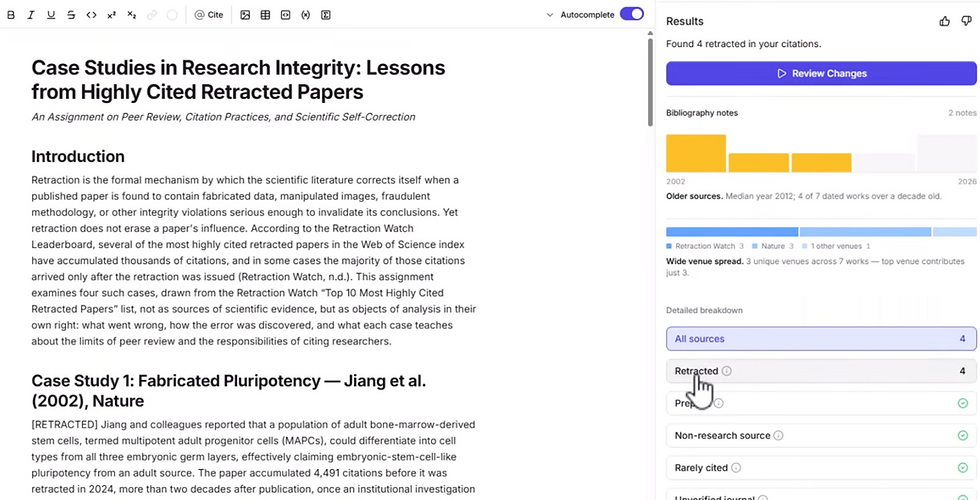
Before submission, compare every in-text citation with your reference list. Every cited source should appear in the bibliography, and every bibliography entry should be cited in the manuscript.
Follow One Citation Style Consistently
Whether you're using APA 7, Harvard, MLA, Chicago, or IEEE, stick to one style throughout the entire paper. Consistency is just as important as correctness.
Verify Every Reference
Before submitting your manuscript, confirm that:
Author names are spelled correctly.
Publication years are accurate.
Journal titles are complete.
DOIs are included where available.
Volume, issue, and page numbers are correct.
These small checks can prevent unnecessary reviewer comments.
Read Original Papers
Whenever possible, cite research after reading the original publication rather than relying solely on another author's interpretation.
This helps you better understand the study and reduces citation errors.
Proofread Your Reference List Separately
Many researchers proofread the main text several times but ignore the references.
Spend dedicated time reviewing your bibliography. A separate reference check often reveals mistakes that would otherwise be overlooked.
Make Citation Easier with AI
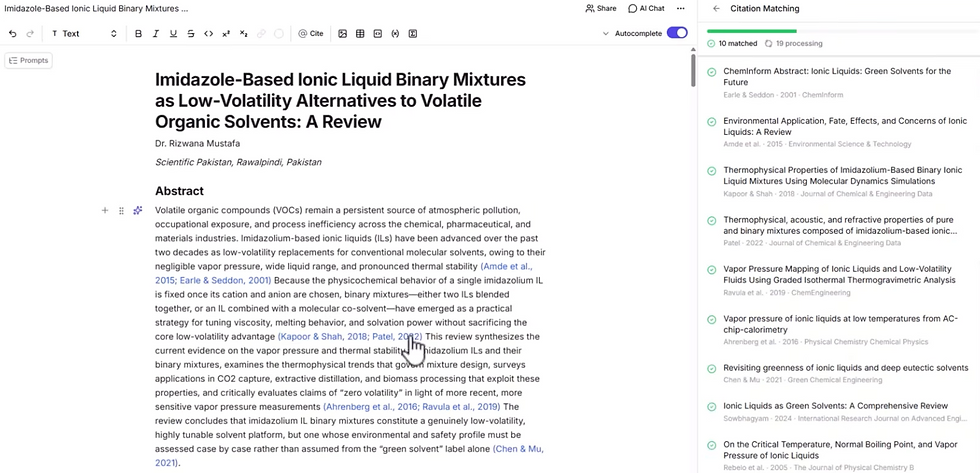
Managing dozens or even hundreds of references manually can be overwhelming. AI-powered writing assistants can help organize citations, generate reference lists, and maintain consistent formatting while you focus on your research.
One useful tool is Jenni AI, which supports researchers by assisting with academic writing, citations, paraphrasing, literature reviews, and manuscript development. While you should always verify AI-generated citations for accuracy, it can significantly reduce the time spent formatting references.
Access it here: Jenni AI
Discount Code: RIZ20
Conclusion
A strong research paper is not judged only by its findings but also by its attention to detail. Citation errors may seem minor, yet they can affect reviewer confidence, delay publication, or even contribute to rejection. By using reliable sources, following a consistent citation style, checking every reference carefully, and proofreading your bibliography before submission, you can present a more professional and credible manuscript.
Citation mistakes are among the easiest problems to prevent, yet they remain one of the most common reasons reviewers criticize research papers. Taking a few extra minutes to verify your references can save weeks or even months of revisions. Whether you are writing a thesis, dissertation, journal article, or conference paper, accurate citations help showcase the quality and reliability of your research.
Remember, accurate citations demonstrate respect for previous research and strengthen the integrity of your own work.
Looking for more practical research writing tips, AI tools, publication guidance, and academic resources? Follow Scientific Pakistan for expert content designed to help students, researchers, and faculty write better papers, publish with confidence, and stay updated with the latest developments in research and AI.


This is a great reminder that citation accuracy is just as important as the research itself. Small formatting or attribution mistakes can affect the credibility of an otherwise strong paper, so checking references carefully is definitely worth the extra time. I’ll take a quick Golf Hit break after finishing my references!